Can You Retrain as a Tiler at Any Age?
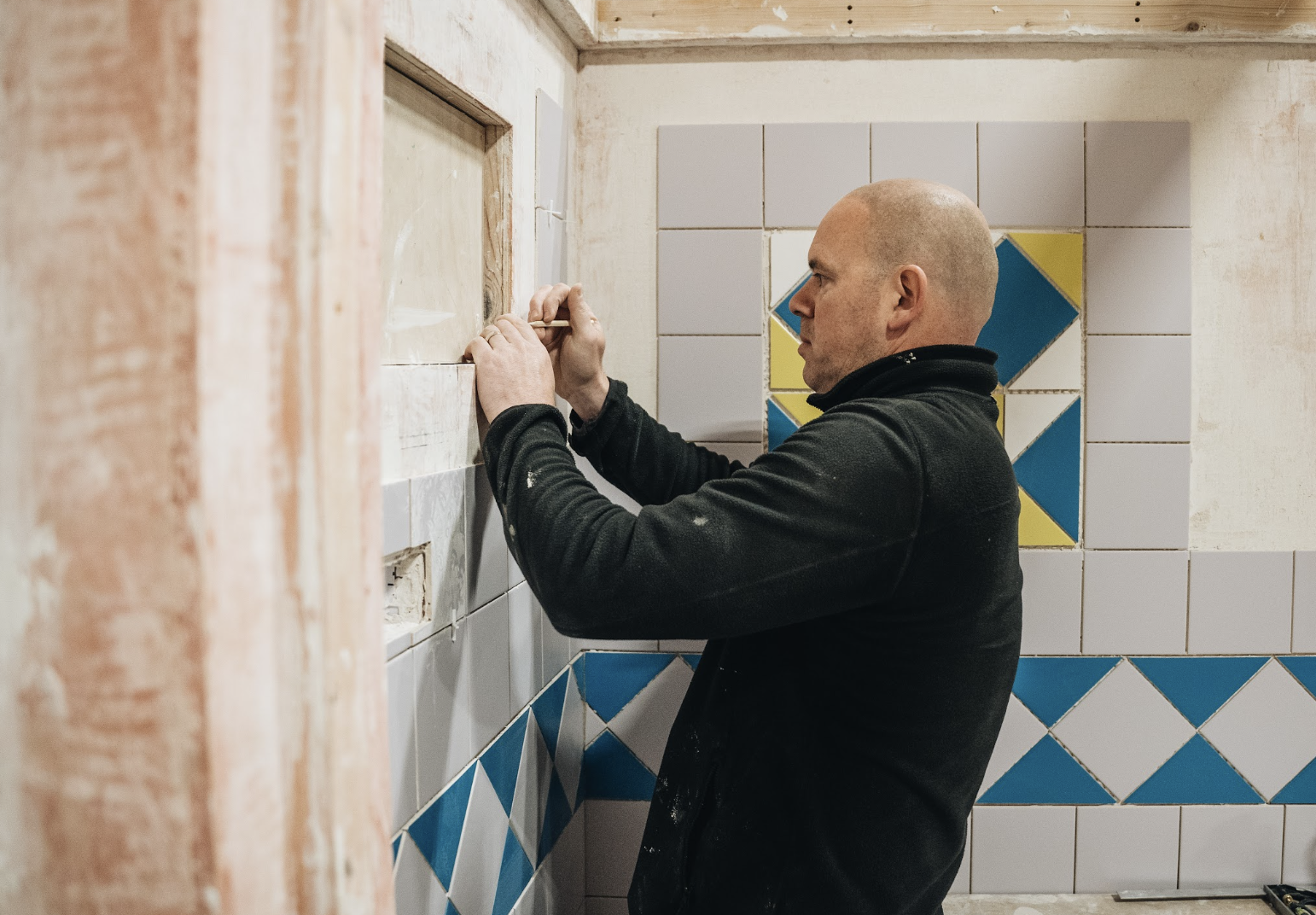
One of the questions we hear regularly from people considering a tiling course is some version of: am I too old for this? It comes from people in their thirties, their forties, their fifties, and occasionally beyond. The short answer is no, you are not too old.
There Is No Age Limit on Learning a Trade
There is no rule, legal or practical, that prevents someone from retraining as a tiler at any age. Tiling is a skill, and skills can be learned at any point in life. What changes as you get older is not your ability to learn, but sometimes the way you approach it and the context you are learning into.
An older career changer usually brings things that a school leaver starting out does not have: life experience, an understanding of how to deal with customers, the ability to manage time and work independently, and often a stronger motivation to make the change work. These things matter in a trade where a significant part of the job is working in people's homes and running your own business.
What the Physical Side Actually Involves
Tiling is physical work, but it is not brutally so. It is not the same as groundwork or roofing. A typical day involves a mix of kneeling and crouching for floor work, standing for wall work, carrying tiles and materials, and using tools that require precision rather than brute strength.
Most people who come to us with concerns about the physical side find that the reality is more manageable than they expected. Good knee pads make a significant difference for floor work. Working at your own pace when you are self-employed means you can structure your days in a way that suits your body. You are not answering to a site manager who needs a hundred square metres done by Thursday regardless of how your back feels.
That said, it is worth being honest with yourself about any existing physical limitations before starting out. If you have a significant knee or back condition, it is worth speaking to your GP before committing to tiling as a trade. For most people, though, the physical demands are very manageable, particularly once you develop good technique and learn to work in a way that reduces unnecessary strain.
The Financial Case for Retraining Later in Life
A common concern for older career changers is whether there is enough earning time left to justify the investment of retraining. It is a reasonable thing to think about, so here is a realistic way to look at it.
A self-employed tiler in the UK typically earns between £250 and £350 per day, with those specialising in higher-skill areas like natural stone or wet rooms earning more. If you retrain at 45 and work until 65, that is potentially two decades of skilled trade income. Even if you retrain at 55, ten years of solid self-employed earnings at those rates represents a very different financial picture to staying in a job that is paying you less or making you unhappy.
The cost of an intensive tiling course is also modest compared to many other retraining options. There is no three-year degree to fund, no years of unpaid or low-paid apprenticeship work. An intensive course means your outlay is limited and your earning potential begins relatively quickly.
It is also worth knowing that our courses are eligible for ReAct+ funding through the Welsh Government, and potentially for Jobcentre funding through the DWP Low Value Provision scheme, which can significantly reduce the upfront cost. Find out more about funding options here.
What Our Students Actually Look Like
People come to us from an enormous range of backgrounds and ages. We have trained people from retail, teaching, the military, driving, office management, construction, hospitality and many other fields. A significant proportion of our students are over 35, and plenty are over 45.
What they tend to have in common is a clear reason for making the change: they want more control over their working life, they are done with shift work or office politics, they want to earn more, or they simply want to work with their hands and see something real at the end of each day. Age rarely comes up as a meaningful obstacle once they are on the course and getting stuck into the practical work.
If you want to read about the experience of people who have made this change, our success stories give a genuine picture of what students go on to achieve after training with us.
Things Worth Thinking Through Before You Commit
Retraining at any age is a significant decision, and it is worth going in with a clear head, not just enthusiasm.
How is your general health and fitness? You do not need to be an athlete, but a basic level of physical fitness helps. If you are not particularly active currently, even a few weeks of walking more and building up your stamina before starting a course can make the training feel more comfortable.
Do you have some financial runway? The first few months after any retraining involve building up a client base and reputation before the work flows consistently. Having a few months of savings or a part-time income alongside helps take the pressure off that early period.
Are you comfortable working alone? Self-employment suits some people very well and others less so. Think honestly about whether you are self-motivated, comfortable managing your own schedule, and happy to handle the admin side of running a business alongside the tiling itself.
Have you thought about your local market? Tiling demand is strong across the UK, but it is worth having a rough sense of the local competition and demand in your area before you start. In most towns and cities, a skilled, reliable tiler with good reviews and professional presentation will find work without too much difficulty.
The Advantage of an Intensive Course for Career Changers
An intensive course suits older career changers particularly well, for a few reasons.
You learn everything in a concentrated period, which means the skills stay fresh and build on each other naturally. There is no six-month gap between one module and the next where you forget what you have learned.
You are working towards a specific point after which you can start earning, without spending years in low-paid trainee work before reaching a professional level.
And the course environment at Expert Tiling Courses UK is built around small group training with experienced instructors, which means you get real feedback on your technique and can ask questions as they come up, not lost among thirty students in a college setting.
Choosing the Right Course Length
If you are retraining as a complete beginner, our 4 day course gives you the core skills to start taking on domestic tiling work. Our 9 day course adds wet rooms, more complex techniques, and business guidance, while our 13 day expert course is the most comprehensive option, taking you to a level where you can confidently handle almost any domestic job and price and present yourself professionally from day one.
If you are not sure which length suits your situation, get in touch with us and we will talk it through honestly. We would rather you choose the right course for your circumstances than the most expensive one.
Age is far less of a barrier to retraining as a tiler than most people expect. What matters more is motivation, a willingness to learn and practise, and a realistic plan for the first few months of self-employment. People in their forties and fifties make excellent tilers, often because they bring exactly the kind of reliability, professionalism, and customer-facing experience that helps build a strong reputation quickly.
If the question that has been holding you back is whether it is too late, the honest answer from everyone we have trained is that the main regret tends to be not doing it sooner.
Find the perfect course for you
Whether you're just getting started, or have a few years in the construction industry under your belt and are looking to up-skill yourself, we have a course for everyone.