How Long Does It Take to Learn Tiling? (And Start Earning)
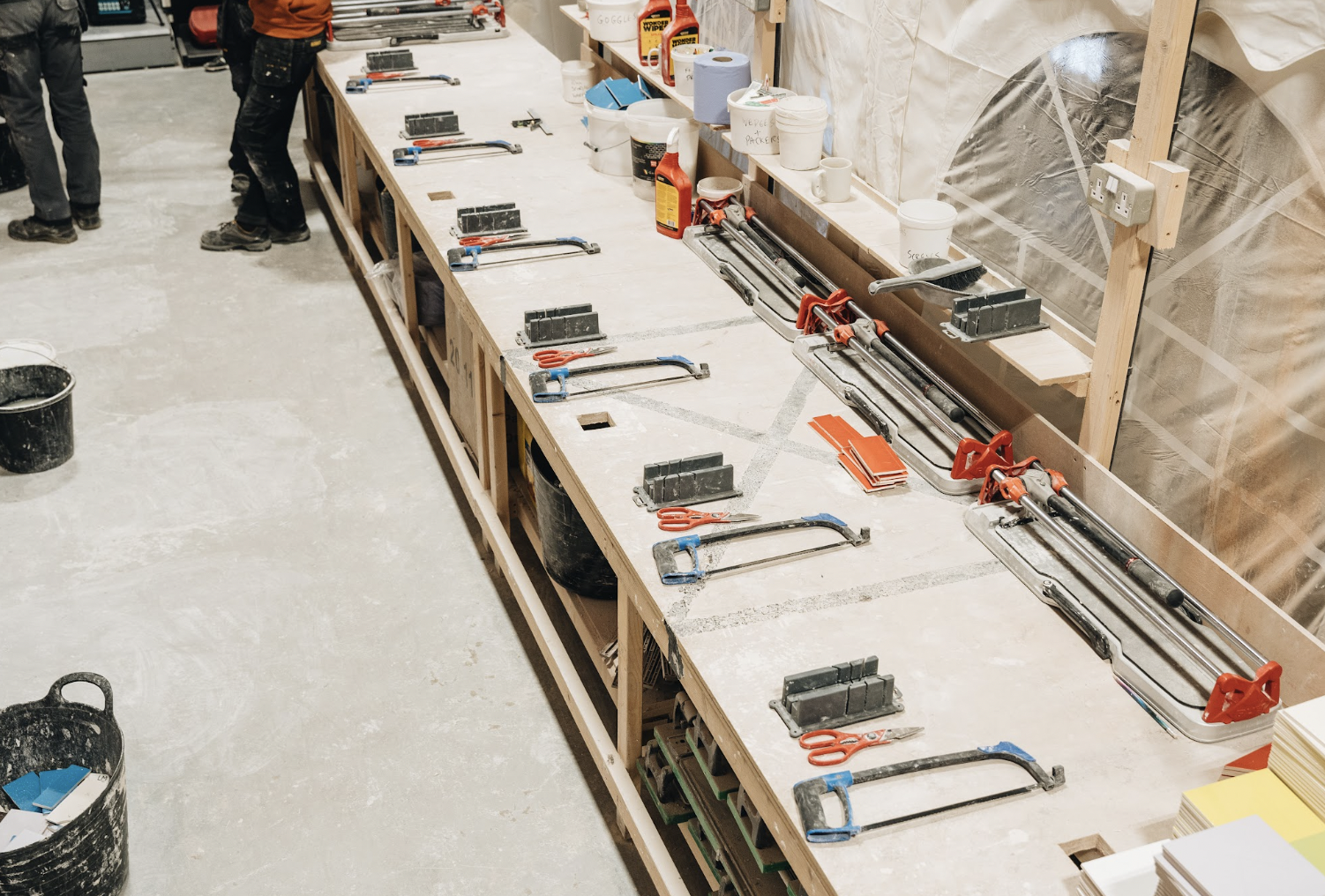
If you are thinking about getting into tiling, one of the first things you want to know is how quickly you can actually get up and running. It is a fair question, and the honest answer depends on what route you take and what level you want to reach.
The Two Main Routes Into Tiling
Most people learning to tile professionally either go through a traditional apprenticeship or take an intensive course. The route you choose makes a significant difference to how long it takes before you are working on real jobs.
The Apprenticeship Route
A wall and floor tiling apprenticeship at Level 2 typically takes around two to two and a half years to complete. During that time you work alongside an employer, learning on the job with some college attendance alongside. The advantage is that you earn as you learn. The drawback is that progress can feel slow, and the quality of training depends heavily on the employer you work for. Not all apprenticeships give you the breadth of experience you need to go self-employed with confidence.
The Intensive Course Route
Intensive tiling courses compress professional training into a much shorter period. Depending on the course length, you can go from complete beginner to job-ready in as little as four days for core skills, or up to thirteen days for a comprehensive, expert-level understanding covering advanced techniques and business start-up.
This is why intensive courses have become the most popular choice for career changers. You are not waiting years to reach a point where you can start earning. You train hard for a focused period, then get out and start building your client base.
What You Can Realistically Achieve at Each Stage
After a 4 Day Course
Four days of proper, hands-on training with expert instruction gives you a solid foundation in the core skills of tiling: surface preparation, setting out, wall and floor tiling, cutting, adhesive application, grouting and finishing. By the end of a well-run 4 day course, you will have practised in realistic conditions and be capable of taking on straightforward domestic tiling jobs.
This means things like kitchen splashbacks, bathroom walls and floors, and hallway floor tiling. These are exactly the kinds of jobs that make up the bulk of a new tiler's early work. You will not be ready for complex wet rooms or large-format natural stone at this stage, but you will have the skills to start earning and building a reputation.
If budget or time is a consideration, the 4 day course is a credible, realistic entry point into paid tiling work.
After a 9 Day Course
A 9 day course builds significantly on those core skills. You move into more complex areas: advanced cutting, wet room tanking, trickier layouts and more demanding problem-solving on irregular or difficult surfaces. You also cover pricing, quoting and the business side of starting out.
By the end of a 9 day course, you are capable of taking on a wider range of jobs, including wet rooms and more complex bathroom projects, with confidence. Wet room work in particular commands higher day rates, so reaching this level opens up better-paying work sooner.
After a 13 Day Course
The 13 day expert course is the most comprehensive option. It covers everything in the 9 day course and goes further into herringbone and other complex bond patterns, resin-filled mitred edges, and advanced finishing details. The 1 day Business Development module is included as standard, covering quoting, pricing, customer handling, and what you need to know to set up and run a tiling business properly from day one.
How Soon Could You Start Earning?
This is where intensive training really stands out. Many of our students take on their first paying jobs within weeks of completing a course, sometimes sooner. A few things help this happen quickly:
Starting with people you know. Friends, family, and neighbours are often the easiest first clients. They are usually more relaxed about working with someone who is newly trained, and the jobs tend to be smaller and more manageable. A kitchen splashback or a bathroom floor for someone you know is a great way to build confidence and get your first photos for a portfolio.
Pricing sensibly at the start. You do not need to undercut the market dramatically, but being realistic about your rate while you are building experience and reviews makes it easier to win those first jobs. As your speed and confidence grow, your rate goes up with them.
Getting set up online quickly. A Google Business profile costs nothing to set up and means you show up when local people search for a tiler. A few good photos of your first jobs and a handful of genuine reviews go a long way early on.
Subcontracting. Some newly trained tilers pick up work through more established tradespeople or building companies as a subcontractor. This can be a good way to earn while building experience on a variety of jobs.
What Affects How Fast You Progress?
How quickly you develop as a tiler depends on a few things beyond the course itself.
How much you practise. The more jobs you take on early, the faster your technique and speed improve. Tiling is a skill that responds well to repetition.
The quality of your training. A course that gives you realistic conditions, proper instruction, and a good range of practical work will leave you better prepared than one that covers the basics and sends you out the door. Small class sizes matter here. If your instructor is stretched across too many students, the feedback you get on your technique suffers.
Your attention to the detail. Tiling rewards people who take care with setting out, measuring, and preparation. Cutting corners early tends to show up in the finished job and can slow your reputation down before it gets started.
How Does Intensive Training Compare to Teaching Yourself?
A lot of people try to learn from YouTube videos or trial and error before deciding to do a course. The honest reality is that self-teaching almost always takes longer and produces inconsistent results. Without someone experienced watching your technique, it is easy to develop habits that look fine on a flat practice surface but cause problems on real jobs.
The other issue is confidence. Going into a paying customer's home and tiling their bathroom is a different experience from practising in your back garden. Knowing that your training was thorough and that your technique has been checked by a professional instructor makes a real difference to how you perform under pressure.
The Realistic Picture
If you take an intensive course and put the work in afterwards, here is a rough idea of what the first year might look like:
In the first few weeks after training, most people are building their first portfolio jobs, often for people they know, getting their first reviews, and sorting out the basics of setting up as self-employed.
By the first few months, a steady stream of local domestic work is realistic, with day rates and job complexity increasing as your speed and reputation grow.
By the end of your first year, tilers who have trained well and marketed themselves sensibly are often earning a solid income and turning down work they are too busy to take on.
None of that is guaranteed. How quickly it happens depends on the effort you put in. But the route from training to earning is much shorter with an intensive course than most people expect.
Ready to Get Started?
If you want to learn more about which course length is right for you and what you can realistically expect to achieve, get in touch with us and we will talk it through honestly. You can also take a look at our success stories to see what previous students have gone on to do after training with us, and browse our full range of tiling courses to find the right fit for where you are starting from.
Find the perfect course for you
Whether you're just getting started, or have a few years in the construction industry under your belt and are looking to up-skill yourself, we have a course for everyone.