Learning to Tile: How to Get Started and Why It Could Be the Right Move for You
If you have ever thought about getting into tiling, whether as a hands on hobby, a useful home skill, or a new career, learning properly from the start makes a huge difference. Tiling well is not just about sticking tiles to a wall. It involves surface preparation, measuring, cutting, setting out, adhesive choice, grouting and clean finishing. Get one stage wrong and the whole job can suffer.
That is why a proper tiling course is such a strong starting point. They give you structure, expert guidance, repeated practice and realistic training conditions. They also give you confidence. If your aim is to turn tiling into a real trade, our courses help you avoid the costly mistakes that slow many beginners down.
Why Get Into Tiling?
There Is Consistent Demand
Bathrooms, kitchens, floors, splashbacks, wet rooms. All of these need tiling, and people are always upgrading homes. Good tilers stay busy because poor tiling stands out instantly. When work is done well, it lasts for years. When it is done badly, it fails quickly. That keeps demand high for skilled tradespeople.
You Learn a Real, Practical Skill
Tiling is tangible. You start a job with bare walls or floors and finish with a clean, sharp final surface. You can see the result of your effort every day. For many people, that is far more rewarding than abstract office work.
There Is a Clear Route Into Self Employment
Tiling is one of those trades where self employment is realistic early on. Once you are trained and confident, you can begin taking on your own jobs. You choose what work you accept, how you price, and how your week looks. That independence is a big draw.
It Is Useful Even If You Never Go Fully Professional
Not everyone who learns to tile wants to build a business. Some simply want to save money and do their own home improvements properly. Knowing how to tile well can stop you wasting money on failed DIY attempts and give you control over your own projects.
It Is a Skill That Does Not Expire
Homes will always need refurbishing. New builds will always be finished with tiles. Tiling does not go out of fashion. Once you learn it properly, it stays with you for life.
Who Can Get Into Tiling?
Almost anyone. You do not need previous trade experience or qualifications to begin. People come into our courses from all sorts of backgrounds, including retail, office work, driving, engineering and fitness. What matters most is patience, accuracy and willingness to practise.
Tiling can be a good fit if you:
- Prefer hands on work
- Like seeing clear results
- Enjoy learning practical skills
- Want a trade that gives you independence
- Are working towards self employment
- Want to take control of your own home projects
You do need to be comfortable being on your feet and working with your hands, but you do not need exceptional strength. Technique matters far more than brute force.
What You Learn on a Tiling Course
A proper tiling course takes you well beyond basic DIY. You learn how professional tilers actually work from start to finish.
Surface Preparation
This is where most beginner mistakes happen. You learn how to check if walls and floors are level, how to prep plaster, concrete, timber boards and existing tiles, and how to make sure the background will support the finished surface long term.
Setting Out and Measuring
Good tiling starts before a single tile is cut. You learn how to plan centres, align tile lines, avoid awkward slivers at edges and make rooms look balanced. This alone separates amateur results from professional ones.
Cutting and Shaping Tiles
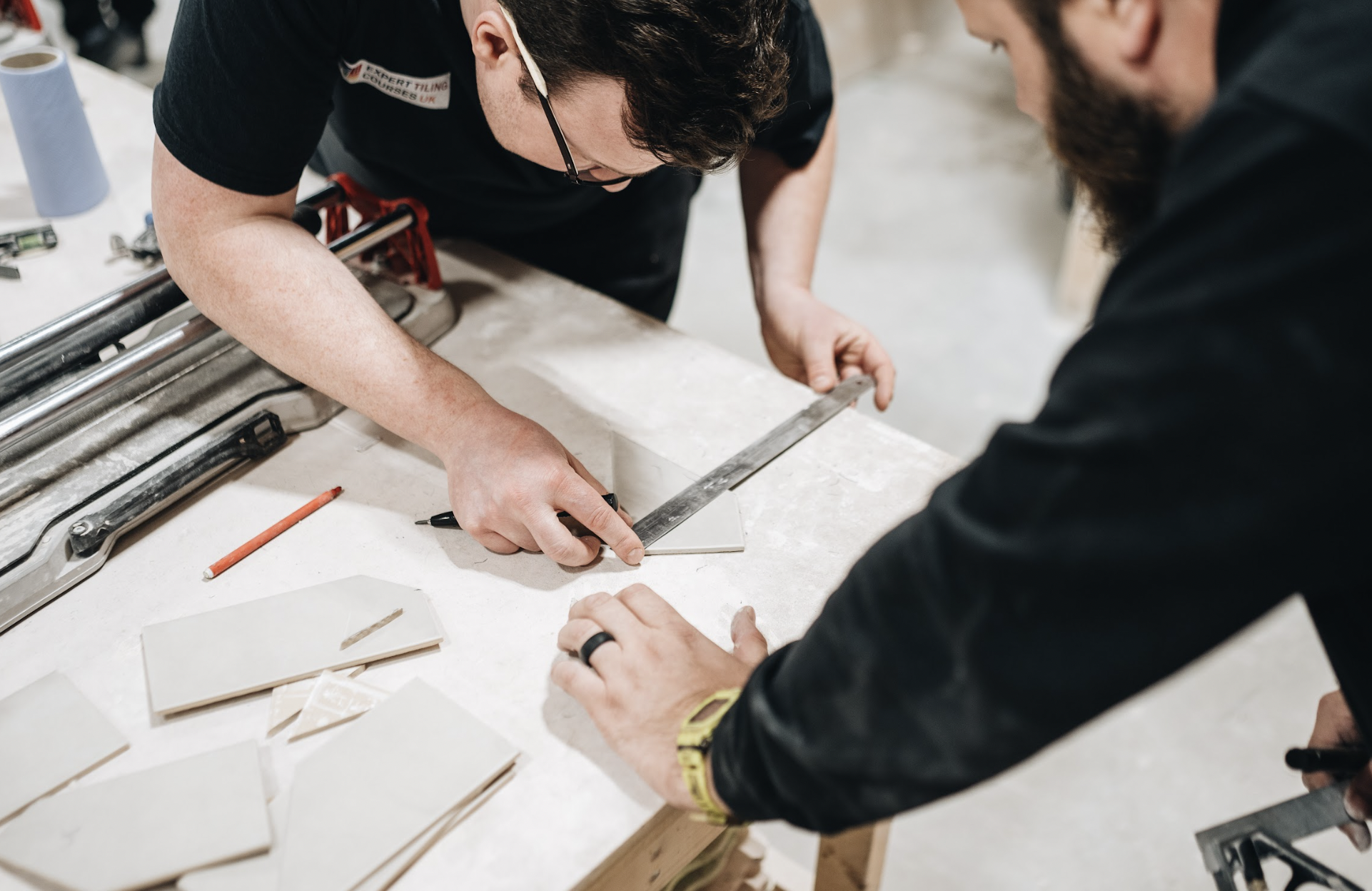
Courses teach you how to use tile cutters and wet saws properly. You practise straight cuts, L cuts, curved cuts, holes for pipes and tricky corners. These are the areas that cause the most stress for beginners.
Adhesives, Grout and Materials
You learn which adhesives to use for which tile types, which grouts suit different environments, and how to avoid common failures like cracking, lifting or water ingress.
Walls, Floors and Complex Areas
You practise wall tiling, floor tiling, corners, window reveals, boxed pipes, socket cut outs and irregular surfaces. This prepares you for the types of problems you will actually face on real jobs.
Advanced Techniques
More advanced courses introduce large format tiles, natural stone, wet rooms, border work and complex layouts like herringbone. These higher skill areas tend to command higher rates in the real world.
Business Skills
If you plan to work professionally, you also learn about quoting, pricing, choosing materials, time management and customer expectations. This side is often overlooked but is critical for long term success.
Certification and Support
Finishing the course gives you proof of training and often continued access to advice and support once you start working on your own.
Why a Tiling Course Is the Best Way to Get Into the Industry
Some people try to teach themselves from videos or weekend experiments, but this almost always leads to slow progress and costly mistakes.
Courses give you:
- A structured learning path
- Expert instruction
- Supervised hands on practice
- Realistic training environments
- Exposure to professional tools and materials
- Clear techniques instead of guesswork
- Confidence before taking on real jobs
Most importantly, you learn how to solve problems properly instead of simply patching over them. That alone can save you months or even years of learning the hard way.
Who the Courses Are For
Tiling courses are suitable for:
- Complete beginners
- People changing careers
- Tradespeople adding another skill
- DIYers wanting professional level results
- Those planning to become self employed
Training adapts to your starting level. Beginners focus on core methods. Those with experience refine technique and push into advanced work.
What to Look for in a Good Tiling Course
When choosing where to train, look for:
- Purpose built training bays
- Real world job simulations
- Wall and floor tiling training
- Advanced cutting and layouts
- Business and pricing guidance
- Ongoing support after the course
- Good reviews from previous students
- Proven track record of helping people
Intensive tiling courses often suit career changers well because they keep skills fresh in your mind and help you build momentum quickly.
Why Expert Tiling Courses UK Stand Out
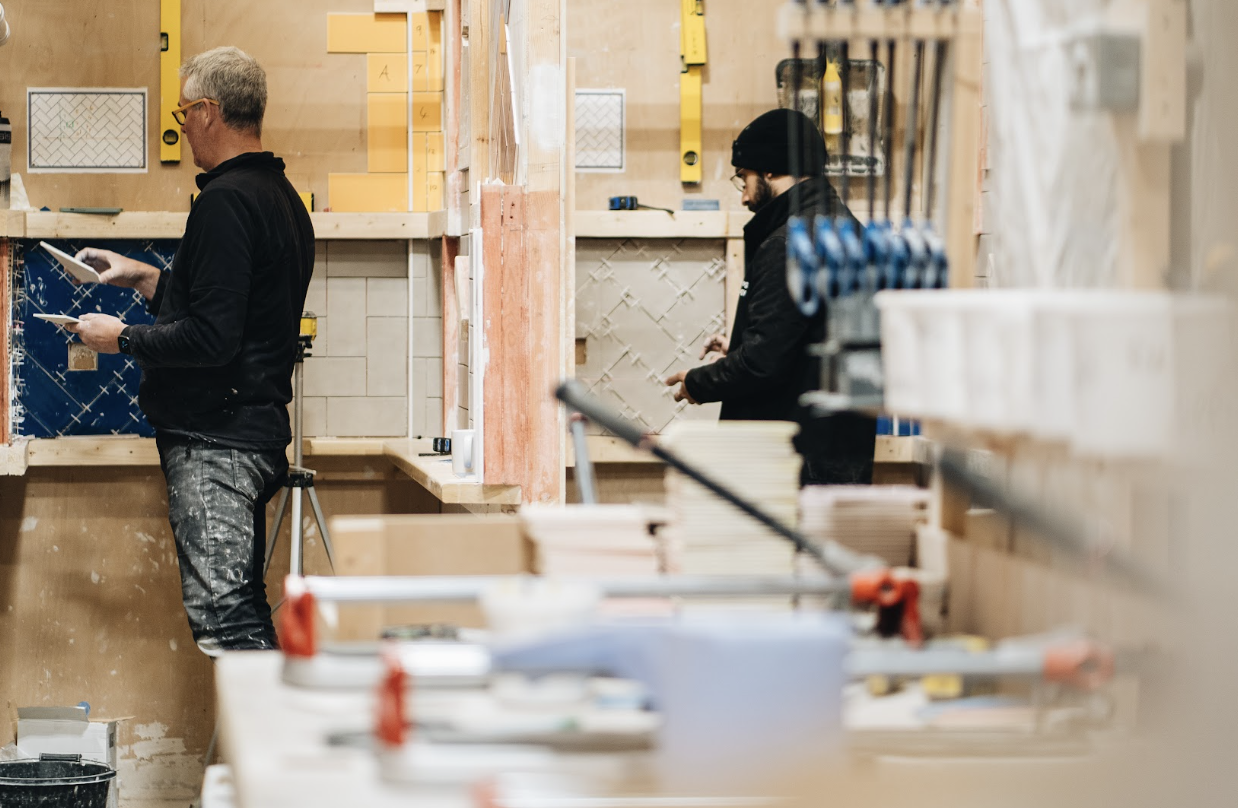
At Expert Tiling Courses UK, we offer fast track and intensive training designed to take you from beginner to job ready in a short space of time. The training centre is purpose built for tiling, with realistic bays that include corners, pipes, windows, sockets and uneven surfaces. This gives you a far better idea of what real on site tiling is like.
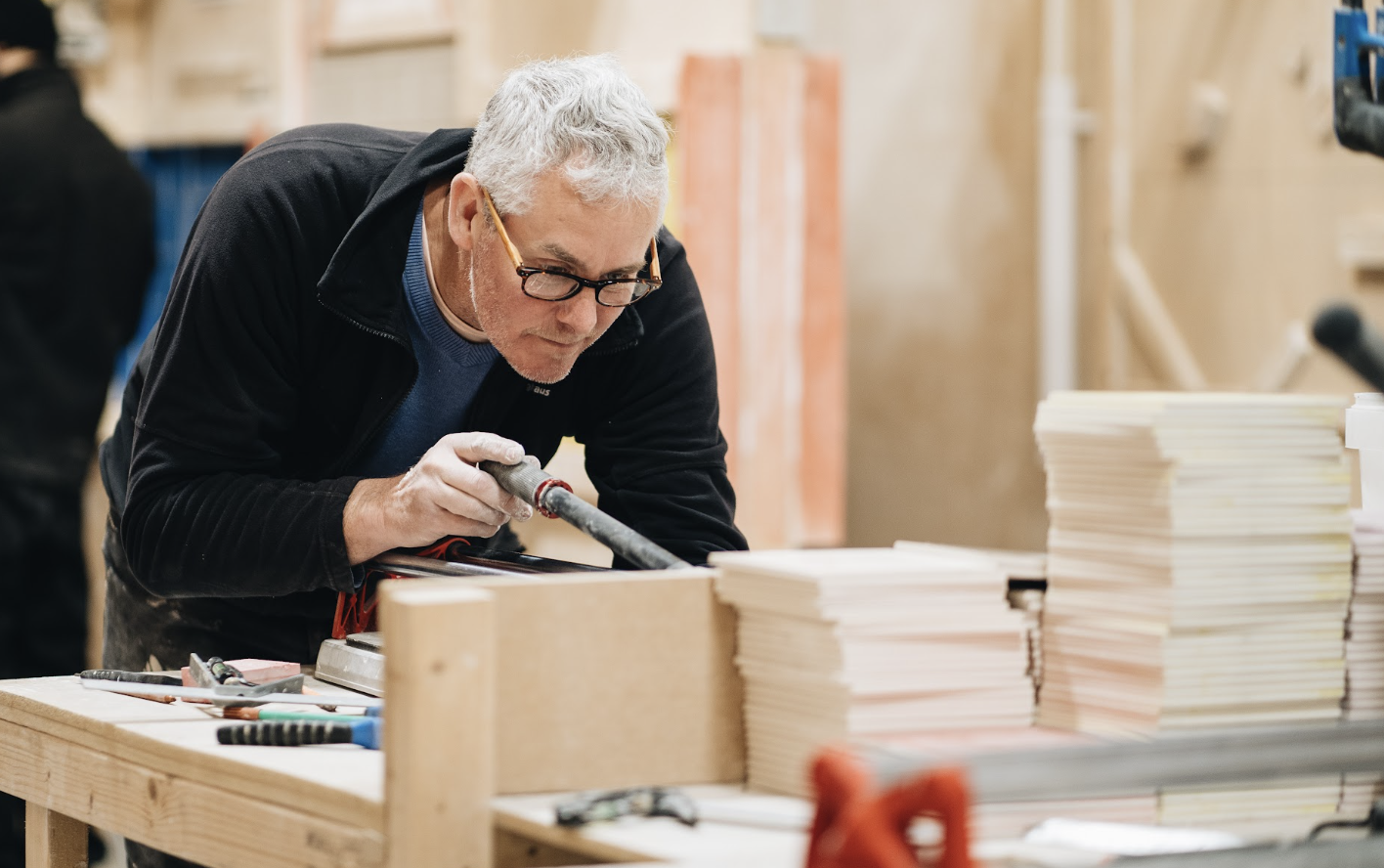
You train hands on from the very first session, under the guidance of experienced instructors. Tools and materials are provided, so you can focus fully on learning rather than worrying about kit.
Courses cover straight wall and floor tiling right through to advanced layouts, stone work, wet areas and finishing details. There is also guidance on pricing, quoting and starting work professionally.
On completion, you receive certification and continued support, which is invaluable when you take your first jobs.
Learning to tile properly opens up real opportunities. Whether you want a career change, a solid trade, or the confidence to tackle your own projects properly, structured training makes everything easier.
If you are serious about getting into tiling, a proper training course is the most reliable and direct route into the industry.
Find the perfect course for you
Whether you're just getting started, or have a few years in the construction industry under your belt and are looking to up-skill yourself, we have a course for everyone.